Siding problems usually start small.
A cracked panel here. A loose section there. A little warping near the bottom. A faded area that looks worse every time the sun hits it. At first, it may seem cosmetic. But siding does more than make your home look nice.
It helps protect your house from rain, wind, moisture, pests, heat, and everyday weather exposure.
So when siding starts showing signs of trouble, homeowners often ask the same question: can this be repaired, or does the whole thing need to be replaced?
If you are comparing siding repair vs. replacement in Augusta, the answer depends on the type of damage, how widespread it is, how old the siding is, and whether there may be hidden moisture issues behind the surface.
What Siding Does for Your Home
Siding is one of your home’s first lines of defense.
It helps shield the structure from rain, humidity, wind, sun, and debris. It also affects curb appeal, energy efficiency, maintenance needs, and resale impression.
When siding is working properly, it helps keep moisture out and gives the home a clean, finished exterior. When it is damaged, loose, cracked, or poorly sealed, it can allow problems to spread.
That is why it is important not to ignore siding issues, even if they look minor at first.
When Siding Repair May Be Enough
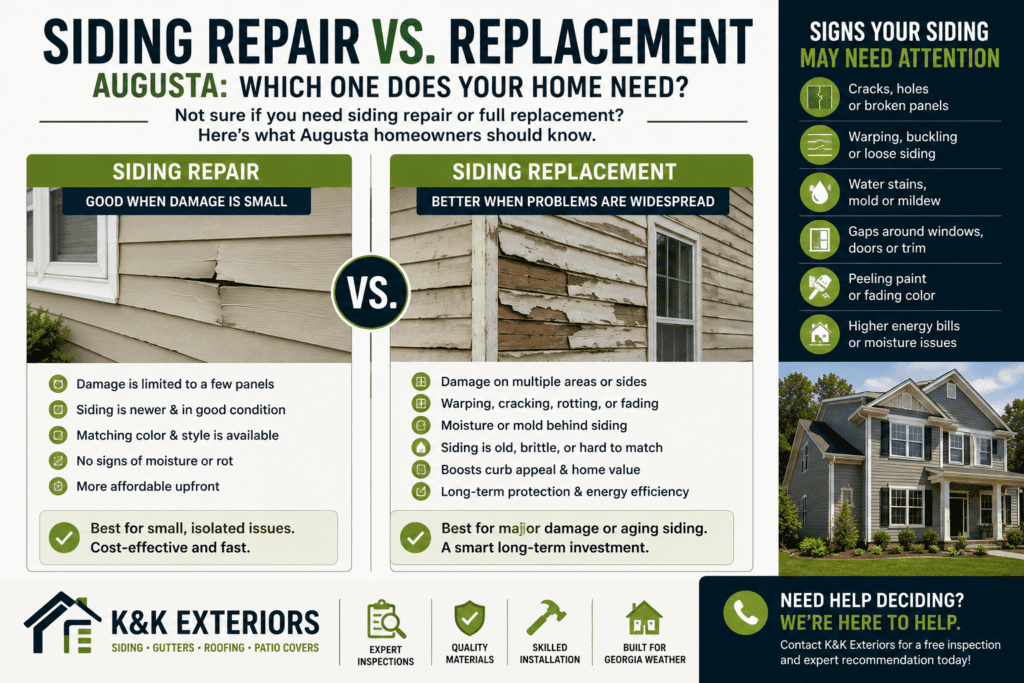
Siding repair may be the right choice when the damage is limited to a small area and the rest of the siding is still in good condition.
For example, one cracked panel, a loose section after a storm, or a small damaged area from impact may not require a full replacement. If the siding is newer, matches are available, and there are no signs of deeper moisture problems, repair may be the most practical option.
Siding repair may make sense when:
- Damage is limited to a few panels
- The siding is not old or brittle
- There is no widespread warping
- The color still matches reasonably well
- There are no signs of rot or water damage behind it
- The rest of the home’s exterior still looks good
- The issue was caused by one isolated event
A professional inspection can help determine whether the problem is truly isolated or part of something larger.
When Siding Replacement Is the Smarter Choice
Sometimes repair is only a short-term patch.
If the siding is old, faded, brittle, warped, or damaged in several areas, replacement may be the better long-term investment. Replacing siding can also make sense when repairs would be difficult to match or when hidden moisture damage is suspected.
Siding replacement may be the better option if:
- Damage appears on multiple sides of the home
- Panels are warping, buckling, or pulling away
- Siding is cracked in many places
- Paint or color is badly faded
- The siding feels brittle
- Moisture has gotten behind the panels
- Repairs would look patchy
- Energy efficiency or curb appeal is a major concern
- The siding is near the end of its lifespan
Replacement can give the home a fresh, consistent look while addressing larger protection issues.
Augusta Weather Can Be Hard on Siding
Homes in Augusta and the CSRA deal with a lot: heat, humidity, heavy rain, storms, pollen, wind, and sun exposure.
Over time, those conditions can wear down siding. Hot sun can fade color. Humidity can make moisture problems worse. Storm debris can crack or dent panels. Poor drainage from gutters or rooflines can send water where it does not belong.
That is why siding problems should be viewed as more than cosmetic.
If damage allows moisture behind the siding, the issue can become more serious. Water can affect sheathing, insulation, trim, and framing if it is ignored long enough.
Signs Your Siding Needs Attention
Not sure whether your siding is just aging or actually damaged?
Walk around your home and look for signs like:
- Cracked or broken panels
- Loose siding sections
- Warping or buckling
- Soft spots
- Mold, mildew, or algae growth
- Faded or uneven color
- Gaps around windows or doors
- Peeling paint near siding areas
- Water stains
- Higher energy bills
- Rot around trim or edges
- Insect activity near damaged areas
One small issue may be repairable. Several warning signs together may point toward replacement.
Moisture Damage Changes Everything
Moisture is one of the biggest reasons siding repair can turn into something more serious.
If water has gotten behind the siding, simply replacing the visible damaged panel may not be enough. The area behind it may need to be inspected, dried, repaired, or replaced depending on the damage.
Signs of possible moisture problems include soft siding, musty smells near exterior walls, bubbling paint inside the home, stains around windows, or siding that appears swollen or warped.
If moisture is involved, it is important to address the cause, not just cover the surface.
Matching Old Siding Can Be Difficult
Even when repair is possible, matching the existing siding can be a challenge.
Older siding may be faded from years of sun exposure. The original color or profile may no longer be available. New replacement pieces can sometimes stand out, especially on highly visible areas of the home.
That does not mean repair is impossible, but it is something homeowners should understand upfront.
If matching will be obvious and the siding is already aging, replacement may create a cleaner, more consistent result.
Cost: Repair Usually Costs Less Upfront
In general, siding repair costs less than full replacement. If only a few panels are damaged, repairing them can be a budget-friendly way to protect the home and improve appearance.
But cheaper upfront does not always mean better long term.
If your siding is failing in several areas, repeated repairs can add up. You may fix one section this year, another next year, and another after the next storm. At some point, replacement may become the smarter financial decision.
The key is understanding whether you are dealing with a one-time problem or ongoing deterioration.
Replacement Can Improve Curb Appeal
New siding can dramatically change the look of a home.
If your exterior looks faded, mismatched, damaged, or dated, siding replacement may do more than fix a maintenance issue. It can refresh curb appeal, improve the home’s exterior consistency, and make the property feel better cared for.
For homeowners thinking about selling in the next few years, curb appeal may be an important factor. Buyers notice siding. They also notice when repairs look patchy or unfinished.
Energy Efficiency May Be a Factor
Siding is not the only thing that affects energy efficiency, but damaged or poorly installed siding can contribute to comfort problems.
Gaps, loose sections, and moisture damage can affect how well the exterior envelope performs. If you are already noticing drafts, hot spots, or rising energy bills, siding may be part of the bigger picture.
A professional can help determine whether siding repair, replacement, insulation improvements, or sealing details should be considered.
Repair vs. Replacement: The Simple Way to Think About It
Here is a practical way to decide.
If the damage is small, recent, isolated, and the rest of the siding is in good shape, repair may be enough.
If the damage is widespread, recurring, moisture-related, or the siding is old and faded, replacement may be the better choice.
It comes down to whether the issue is a small exterior fix or a sign that the siding system is no longer protecting the home well.
Why a Professional Inspection Matters
From the ground, siding damage can be hard to judge.
A cracked panel may be simple. Or it may be a clue that water, pests, or structural movement are involved. A loose section may only need to be secured. Or it may show that the siding has weakened over time.
A professional inspection can help you avoid both extremes: replacing siding when a repair would work, or patching siding when a replacement is clearly needed.
Need Help Choosing Between Siding Repair and Replacement?
Need help figuring out whether your siding needs a small fix or a bigger exterior upgrade? K&K Exteriors can inspect the damage and help homeowners compare siding repair vs. replacement in Augusta based on the age, condition, appearance, and protection needs of their home.