
A screened-in porch can feel like the best “bonus room” in your house… or it can feel like a constant maintenance headache.
The difference is often materials.
In Augusta and the CSRA, your porch has to survive heat, humidity, pollen, storms, and real daily use. So if you’re choosing materials based on price alone, you might end up paying twice, once to build it and again to fix it.
Here’s a simple breakdown of screened-in porch materials, what they do, and what makes the most sense for long-term comfort.
What “screened porch materials” actually includes
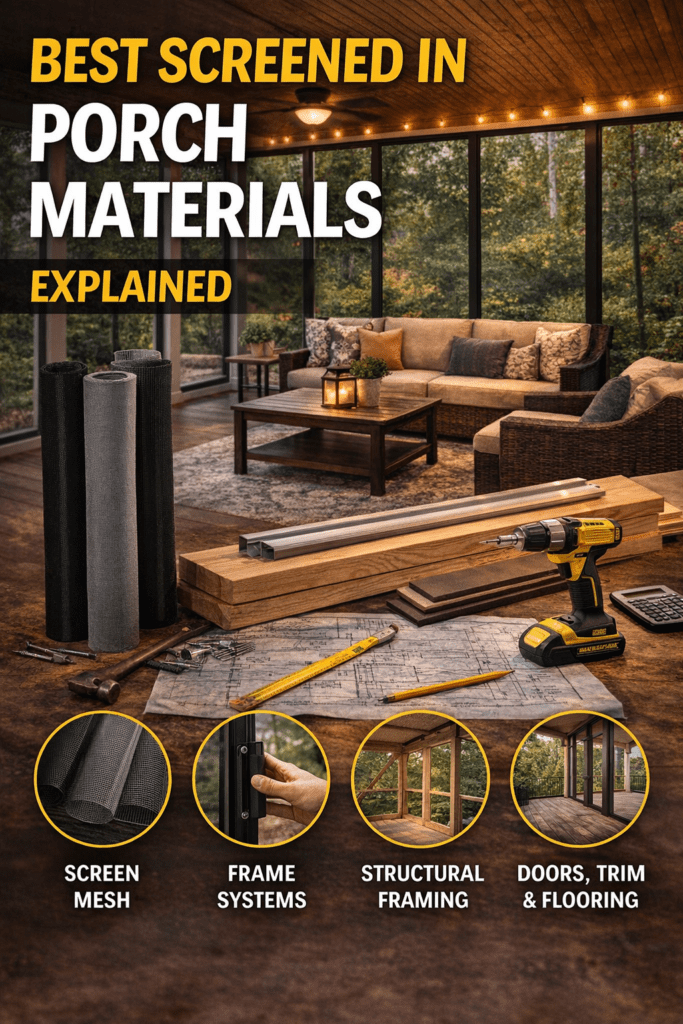
Most homeowners think “materials” just means the screen mesh. But a porch is a system. Materials usually include:
- Screen mesh (the part that blocks bugs)
- Frame system (what holds screens tight)
- Structural framing (posts and supports)
- Doors (the comfort gatekeeper)
- Trim and finishes (what makes it look clean and built-in)
- Flooring (concrete slab vs. decking vs. finished surfaces)
If you only upgrade one part and the rest is weak, the porch will still feel weak.
Screen mesh options (bug protection vs. durability vs. view)
Standard fiberglass screen
Best for: light use, budget-friendly projects
Pros: affordable, common
Cons: can tear or stretch faster with pets or heavy traffic
This is fine if the porch is mostly for occasional sitting and you don’t have pets pressing against screens.
Heavy-duty / pet-resistant screen
Best for: kids, pets, daily use
Pros: stronger, better long-term durability
Cons: costs more, may slightly reduce visibility depending on mesh
If your porch will get real use, this is usually money well spent.
High-visibility screen
Best for: porches with a great backyard view
Pros: clearer view, more open feel
Cons: often more expensive
This is the choice for homeowners who want the porch to feel less “screened in” and more like an outdoor room.
Tighter mesh screens (for smaller insects)
Best for: extra bug control
Pros: better protection from tiny pests
Cons: can reduce airflow depending on mesh
This can be helpful, but airflow matters a lot in CSRA summers. Too tight can make the porch feel warmer.
Framing systems: what keeps screens tight
The screen is only as good as the system holding it.
A quality system should:
- keep tension tight over time
- create clean edges and corners
- prevent gaps around frames
- make repairs easier later
Cheap systems can loosen faster, which leads to sagging screens and uneven appearance.
Structural framing: strong matters more than fancy
A screened porch needs solid framing so screens and doors stay aligned.
Wood framing
Pros: classic look, flexible design options
Cons: may need more long-term maintenance depending on exposure
Wood can last a long time when built and finished correctly.
Aluminum framing systems
Pros: low maintenance, clean modern look
Cons: can cost more depending on system and finish
Aluminum often gives a more modern style and can reduce maintenance concerns.
Doors: the part people regret cheaping out on
Here’s the tabloid truth: a screen door can ruin the whole porch.
If the door sags or has gaps, bugs still get in. If it sticks, people stop using it.
Better doors and sealing usually mean:
- smoother use
- better bug control
- fewer alignment issues later
Flooring: what feels good and lasts
Floor choice depends on the structure you already have.
- Concrete slab: durable, budget-friendly, easy to clean
- Decking/composite: more finished feel, comfortable underfoot
- Finished surfaces: look great, but must match the structure and moisture conditions
A washable outdoor rug can also make a huge difference in comfort and appearance.
The best “balanced” material setup for most homes
If you want long-term comfort and fewer repairs, a good all-around setup is:
- heavy-duty screen if pets/kids or daily use
- solid framing system that holds tension
- quality door hardware and sealing
- clean trim and finished edges
- flooring that matches the porch structure and is easy to maintain
That combo usually delivers the best “I love this space” result.
Bottom line
The best screened-in porch materials are the ones that match your lifestyle and your climate. In Augusta and the CSRA, durability and sealing matter more than people expect.
If you want help choosing materials that fit your home and budget, a professional estimate makes it clear fast.
K&K Exteriors: Discover Custom Patio Covers & Screen Rooms in Augusta
Contact K&K Exteriors: Schedule Your Estimate for Exterior Improvements: Get a Screen Porch Estimate in Augusta