
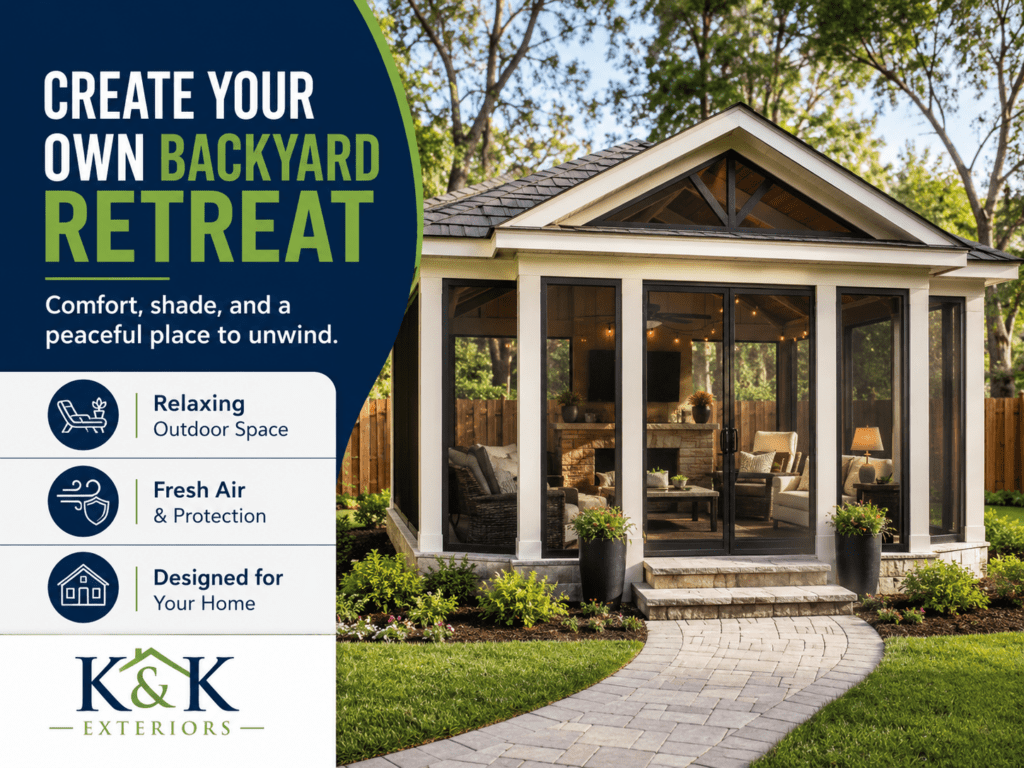
Some homeowners want more outdoor living space, but they do not necessarily want it attached directly to the house.
Maybe the backyard has a perfect quiet corner. Maybe the patio gets too much sun. Maybe the current porch is too small. Or maybe the dream is a peaceful, separate space where you can read, sip coffee, watch the yard, or entertain without feeling boxed into the main home.
That is why a freestanding sunroom can be such an interesting option.
It gives you the feeling of an outdoor retreat with more structure, shade, and comfort than an open patio. Depending on the design, it can become a cozy sitting area, a garden-view room, a screened outdoor lounge, or a more protected backyard escape.
But is it the right fit for your home? That depends on your yard, your goals, and how you plan to use the space.
What Is a Freestanding Sunroom?
A freestanding sunroom is a separate outdoor structure that is not directly attached to the main house. It may be built as a screened room, enclosed sitting area, covered outdoor structure, or a more open-air space with protective screening.
Unlike a traditional sunroom addition, which is usually connected to the home, a freestanding option stands on its own. That can give homeowners more flexibility in placement and design.
For example, it could sit near a garden, beside a pool, in a shaded backyard corner, or near an existing patio area. It can create a destination in the yard instead of simply extending the back door.
Why Homeowners Like Freestanding Outdoor Spaces
The biggest benefit of a freestanding sunroom is separation.
It feels like a retreat. You step away from the house and into a space designed for relaxation. That can make even a familiar backyard feel more special.
A freestanding space can be used for:
- Morning coffee
- Reading or quiet time
- Outdoor dining
- Entertaining guests
- Poolside seating
- Garden views
- A shaded hangout area
- A breezy screened lounge
It can also help homeowners use parts of the yard that are currently wasted. A sunny patch, empty corner, or underused patio area may become one of the most inviting spots on the property.
When a Freestanding Sunroom Makes Sense
A freestanding sunroom may be a smart option if your home layout does not easily allow for an attached porch or patio enclosure.
Some houses have rooflines, windows, doors, or exterior features that make attached additions more complicated. In other cases, the backyard simply has a better location away from the house.
You may want to consider a freestanding option if:
- Your existing patio is too small
- Your backyard has a better shaded area away from the home
- You want a quiet retreat separate from the main house
- You have a pool or garden area that needs seating
- Your home layout makes an attached screen room difficult
- You want to define a new outdoor living zone
The right design can make the structure feel intentional instead of random.
Think About Shade, Airflow, and Comfort
A sunroom should be comfortable, not just pretty.
Before building one, think about where the sun hits your yard during the day. A beautiful structure placed in full afternoon sun may become too hot to enjoy. A location with some natural shade or the right roof design can make the space much more usable.
Airflow is also important, especially in Georgia. If the structure is screened, the screen layout should allow fresh air to move through. If it is more enclosed, ventilation and heat control become even more important.
A good outdoor space should invite you in, not make you sweat through ten minutes of sitting there.
Should It Be Screened?
For many Georgia homeowners, screening is one of the best parts of a sunroom or outdoor enclosure.
A screen for patio enclosure or freestanding outdoor room can help keep bugs, leaves, and debris out while still letting in light and air. That makes the space feel more comfortable during warm months, especially when mosquitoes are active.
Screens also help define the room. Instead of sitting in a completely open structure, you get a more finished outdoor space that feels cleaner and more protected.
If your main goal is fresh air without bugs, a screened design may be the best choice.
Freestanding Sunroom vs. Patio Cover
A freestanding sunroom and patio cover can both improve outdoor living, but they serve different purposes.
A patio cover usually extends or protects an existing patio area near the home. It is great for shade, rain protection, and making a backyard patio more usable.
A freestanding sunroom creates a separate destination in the yard. It may feel more private, more peaceful, or better positioned for views, shade, or entertaining.
One is not automatically better than the other. The right choice depends on how your yard is laid out and what kind of outdoor space you want.
A patio cover company that also understands screen rooms and outdoor enclosures can help you compare your options.
Design Matters More Than You Think
A freestanding structure needs to look like it belongs on the property.
If it feels too large, too small, too plain, or poorly placed, it can make the yard feel awkward. But when the design fits the home, landscaping, and outdoor flow, it can become a beautiful focal point.
Think about:
- Size and proportions
- Roof style
- Materials
- Color
- Doors and access points
- Screen placement
- Walkway connection
- Lighting and fans
- Furniture layout
The goal is to create a space that feels useful and attractive from every angle.
Do Not Forget the Pathway
Because a freestanding sunroom is separate from the home, access matters.
How will you get to it? Will there be a walkway? Will it connect to an existing patio, pool deck, or garden path? Will the path be easy to use in wet weather? Will it feel natural, or will it seem like the structure was dropped in the yard without planning?
A simple walkway can make a freestanding sunroom feel connected to the home even though it stands apart from it.
That connection helps the space feel more intentional and easier to use.
Maintenance Should Be Part of the Plan
Any outdoor structure needs maintenance.
Screens may eventually need repair. Trim may need attention. Roofing or cover materials should be chosen with local weather in mind. If the sunroom is near trees, leaves and pollen may collect more often. If it is near a pool, moisture and chemicals may affect materials over time.
Choosing the right design and materials from the start can help reduce headaches later.
A well-built freestanding outdoor room should be enjoyable, not another high-maintenance chore.
A Freestanding Sunroom Can Change the Way You Use Your Yard
The right outdoor structure can make your backyard feel completely different.
Instead of only using the patio by the back door, you may find yourself walking out to a quiet garden room. Instead of avoiding the yard because of bugs or heat, you may have a screened, shaded place to relax. Instead of hosting everyone inside, you may have a comfortable outdoor space for conversation, meals, or weekend downtime.
That is the real value. A freestanding sunroom can give your yard a purpose it did not have before.
Need Help Planning a Freestanding Sunroom?
Need help creating a more comfortable outdoor living space that feels peaceful, practical, and built around your home? K&K Exteriors can help homeowners explore options for a freestanding sunroom or screened outdoor space designed around their yard, lifestyle, and Georgia weather.