
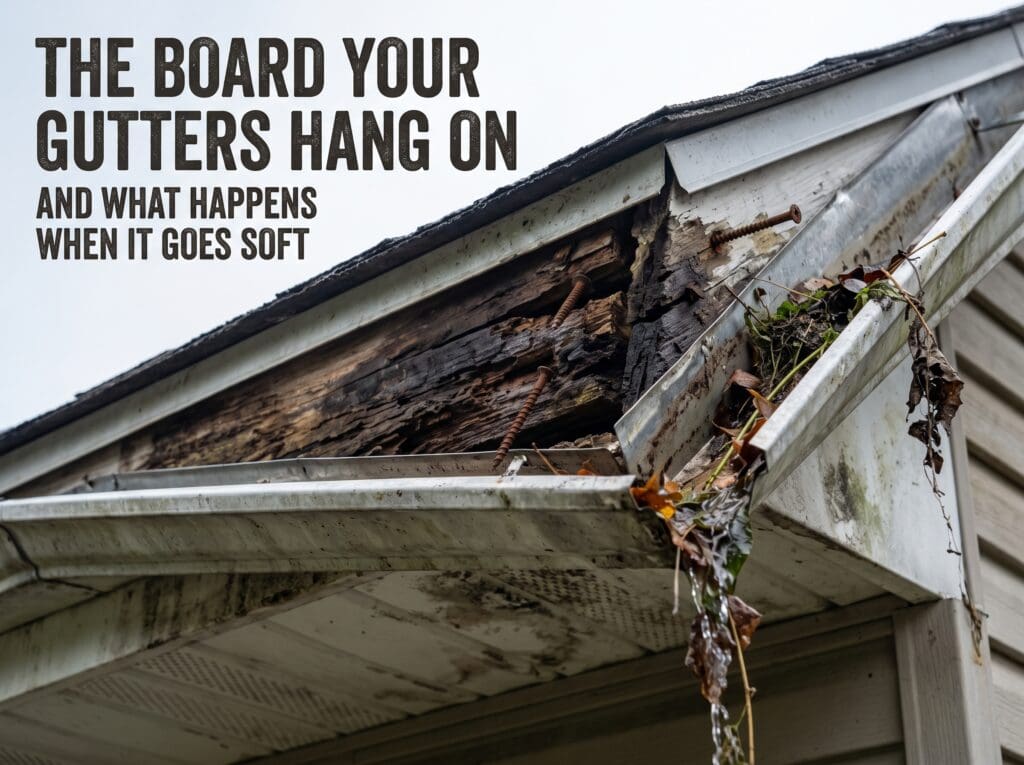
Gutter hangers screw into the fascia board. That is the whole structural arrangement. The bracket sits inside the trough, the screw bites into the wood behind it, and everything the gutter carries in a storm is held by the condition of that board.
Which means a gutter problem and a wood problem are frequently the same problem, and the order you discover them in decides what the job costs.
Telling Soft From Merely Ugly
Stained fascia and rotten fascia look similar from the ground and behave completely differently. Dark streaking below the gutter line is usually just dirt washed down the face, and it cleans off. What you are looking for is the board giving up its shape.
Paint that is flaking in sheets rather than chalking evenly is the first sign. A board that has waved or cupped along its length is the second. If someone can get a ladder on it safely, firm pressure from a screwdriver handle tells you the rest, because sound wood pushes back and compromised wood has give in it.
The gutter will usually tell you before the wood does. A run that keeps pulling loose in the same place after it has been resecured is not a hanger problem. Hangers do not fail twice in one spot on good wood, so if yours have, something behind them is no longer holding a screw. That is worth knowing before you pay to have the gutter rehung a third time.
Soffit is the other half of this. That is the panel underneath the overhang, and in most homes it carries the vents that feed air into your attic. When soffit stains or sags, water has been getting in from above, and because the attic depends on those vents to move air, soffit damage tends to come with attic humidity you have not noticed yet. Soffit that has opened up is also how squirrels and wasps get into an overhang, which people usually discover in a less academic way.
Where the Water Is Actually Coming From
Rotten fascia is a symptom, so replacing the board without finding the source buys you a few years at most.
The most common source is water running behind the gutter instead of into it, which is a drip edge issue and the reason a gutter can look perfectly clean while the wood behind it quietly fails. We have written about why that happens and how to spot it.
The second is overflow. A gutter that is undersized, clogged, or sitting level sends water over the lip in heavy rain, and the back side of that sheet runs straight down the fascia. Around here the clogs are seasonal and predictable, which is why pollen season and the pine straw drop matter more than people expect.
The third is simply an old gutter resting against the board with nothing behind it to shed water. Thirty years of that will do it on its own.
When the boards do need to come off, the practical news is that everything in that assembly is already apart. The gutter is down, the fascia is exposed, the soffit is accessible, and the trim and siding at the edge are reachable without anybody coming back out. That is the right moment to handle all of it, and to put the gutters back up as a seamless run on proper hangers rather than reinstalling an old system onto new wood.
The sequence to avoid is the opposite one, which is new gutters hung on a board that should have been replaced first. It looks finished and it is not, and the second round costs what the first round should have.
If a gutter on your house has come loose more than once, have someone put a hand on the wood behind it. That answer changes the job.