
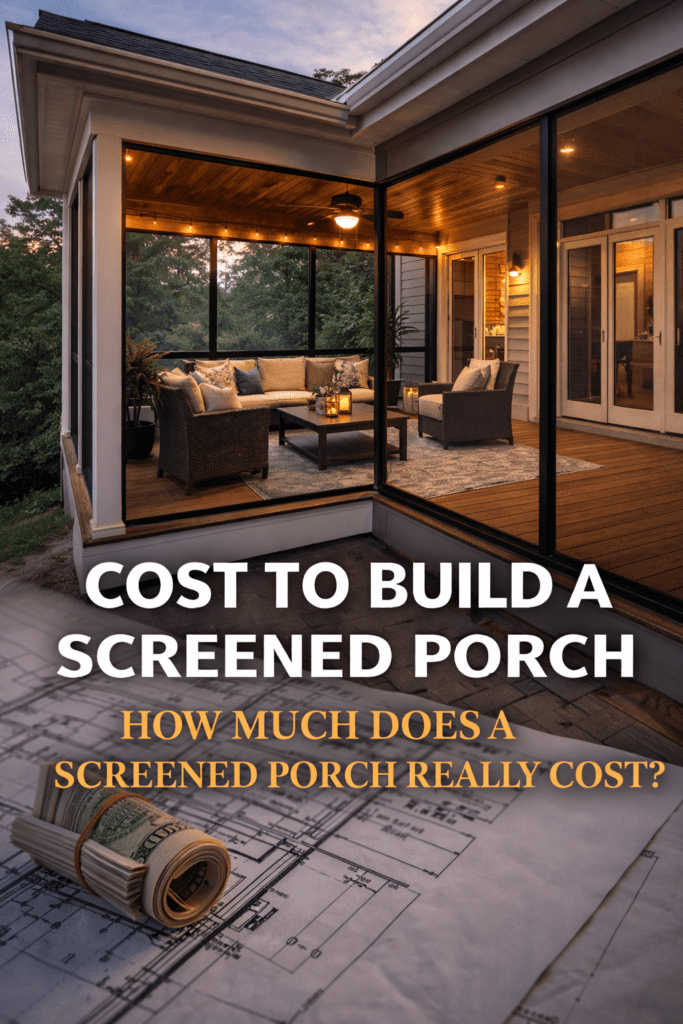
Cost to Build a Screened Porch
How Much Does a Screened Porch Really Cost?
Let’s get this out of the way: if you search “screened porch cost,” you’ll find numbers all over the place. One site makes it sound like a weekend DIY project. Another makes it sound like you need to sell a kidney.
So what’s the truth?
A screened-in porch can be one of the best upgrades you make for outdoor living in Augusta and the CSRA, but the cost depends on a few big decisions. The good news is you usually have more control over the budget than you think, as long as you understand what actually drives the price.
This post breaks it down in plain language so you can plan smart and avoid the “we didn’t know that would cost extra” surprise.
Why screened porch costs vary so much
A screened porch is not one standard product. It can be:
- a simple screen enclosure on an existing porch
- a bigger build with new framing and a roof tie-in
- a fully finished outdoor room with lights, ceiling fans, upgraded screens, and a clean “indoor feel”
Those are three very different projects, even though people call all of them “a screened porch.”
That is why cost ranges can feel confusing. You are not comparing apples to apples.
The biggest cost factors (the stuff that really moves the price)
1) Are you screening in an existing porch, or building new?
This is one of the biggest budget deciders.
Screening in an existing porch or patio can be more affordable if the structure is already solid and ready for screens.
Building a new screened porch usually costs more because it can include:
- new framing
- a roof structure
- supports and footings
- tying into the home correctly
A lot of “cheap” quotes assume you already have a good structure in place. If you do not, the numbers change.
2) Size, shape, and layout
This one is simple: more square footage means more materials and labor.
But size is not the only thing. The shape matters too.
- Straight, simple layouts are usually more budget-friendly
- Complicated angles and custom shapes can increase labor time
- More corners and transitions can add complexity
Even a small change in layout can affect the build process and the final price.
3) Roofing and tie-in work
If your screened porch needs a roof, or the roof needs to connect to the home, it becomes a bigger project.
Roofing costs change based on:
- the roofline and slope
- matching materials
- support requirements
- how the structure connects to the house
This is also an area where quality matters. A roof tie-in that is not done right can lead to moisture problems later, and that gets expensive fast.
4) Screen and enclosure options
Not all screens are the same. The type of screen you choose affects both comfort and price.
Common differences include:
- basic mesh vs. heavy-duty screens
- screens designed for better visibility
- tighter mesh options for extra bug protection
- pet-resistant or stronger screen materials
In a high-use porch, especially with kids or pets, paying more for durability can be worth it. Nobody wants to repair screens every season.
5) Doors and entry points
Doors are often overlooked, but they matter a lot.
A screened porch that is comfortable and bug-resistant usually has:
- properly fitted doors
- good seals
- sturdy hardware
- doors that do not stick, sag, or leave gaps
Adding multiple entry points, upgraded doors, or better sealing can increase cost, but it can also improve the day-to-day experience.
Because here’s the tabloid truth: one bad door can ruin the whole porch.
6) Finishes and comfort upgrades
This is where a screened porch goes from “nice” to “wow.”
Finishes and upgrades can include:
- ceiling fan installation or fan-ready framing
- lighting (overhead, wall lights, string lighting support)
- outlets for charging, lamps, or TVs
- nicer trim details that look finished
- flooring upgrades
- built-in seating or storage
If you want the porch to feel like an outdoor living room, you’ll probably want at least a few of these. They add cost, but they also add value and comfort.
The hidden costs homeowners forget to plan for
These are the “surprises” that can sneak into a project if you do not talk about them upfront.
Repairs to existing structures
If you are screening in an existing porch, the structure has to be solid. Sometimes the framing needs repairs before screens can be installed correctly.
Electrical work
If you want a fan, lighting, or outlets, electrical may be a separate line item. It is worth planning early instead of adding it later.
Drainage and water control
If water drains toward the porch or the home, it can create long-term issues. Sometimes small drainage improvements are needed to protect the investment.
Permitting and approvals
Depending on where you live in the CSRA and what the project involves, permits or inspections may apply. A professional contractor can help guide this so it does not slow down the project.
The “budget levels” idea: what kind of porch are you building?
Here is a helpful way to think about it.
Basic screened porch
- simple enclosure
- minimal upgrades
- focused on bug protection and shade
Best for: homeowners who want a practical, low-frills space.
Mid-range comfort porch
- higher-quality screen options
- better lighting
- fan-ready setup
- a finished look with clean trim details
Best for: homeowners who want to use the porch often and make it feel like real living space.
High-comfort “outdoor room”
- premium screens and finishes
- upgraded lighting and electrical
- strong attention to layout and design
- the porch feels like the best room in the house
Best for: homeowners who want maximum use and maximum wow factor.
You can get value at any level. The key is choosing the level that matches how you plan to use it.
The smartest way to get an accurate cost estimate
If you want to avoid guesswork, here are the questions that help a contractor quote accurately:
- Are we screening an existing porch or building new?
- How big does it need to be for my furniture and walking space?
- Do I want basic screens or heavy-duty, higher-visibility options?
- Do I want one door or multiple entry points?
- Do I want lighting, a fan, or outlets?
- Do I want it to feel like an outdoor room or a simple screened space?
The clearer you are, the more accurate your estimate will be.
The bottom line
A screened porch is one of the few home upgrades that improves comfort now and can also help resale appeal later. The cost depends on structure, size, materials, and upgrades, but you can usually shape the budget by prioritizing what matters most to you.
If you want a screened porch that looks clean, feels comfortable, and holds up in CSRA weather, the best next step is getting a quote based on your home and your goals.
K&K Exteriors: Discover Custom Patio Covers & Screen Rooms in Augusta
Contact K&K Exteriors: Schedule Your Estimate for Exterior Improvements: Get a Screen Porch Estimate in Augusta