
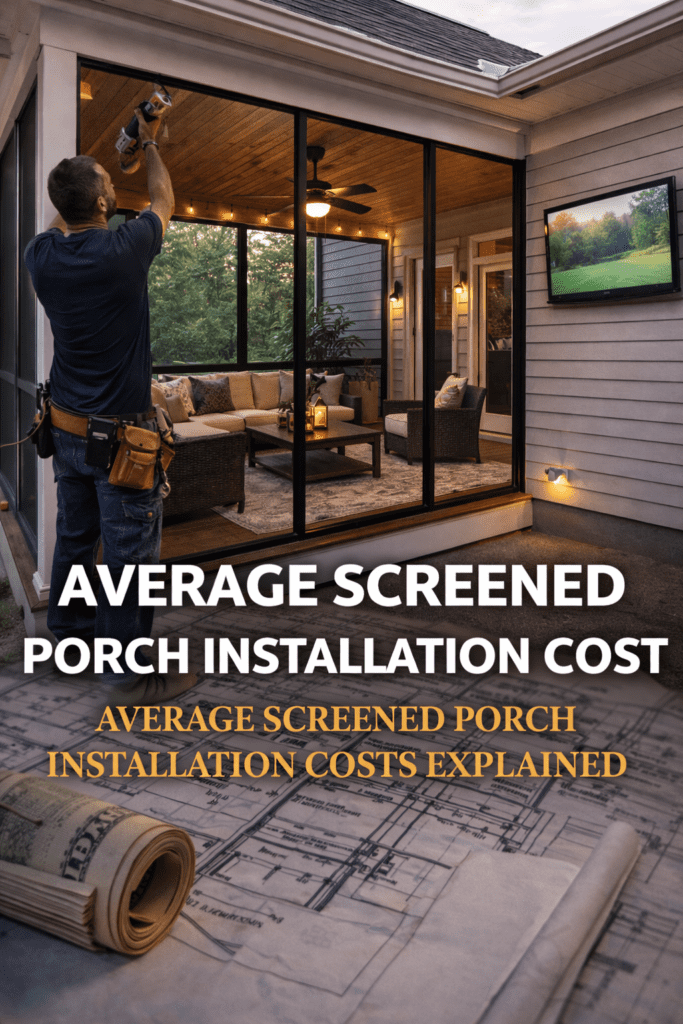
If you’ve been shopping around online for screened porch pricing, you’ve probably seen numbers that feel completely random. One site says it’s “affordable.” Another makes it sound like you need a second job.
Here’s the truth: average cost only makes sense when you know what the “average” actually includes. A screened porch can be a simple enclosure, or it can be a finished outdoor room with lighting, fans, upgraded screens, and a clean, polished look.
So instead of throwing out a vague number, this blog explains what drives installation costs, what’s usually included, and what can push your quote higher in Augusta and the CSRA.
What “installation cost” usually means
When most contractors talk about screened porch installation, they’re usually referring to the labor and materials needed to build or enclose the porch, including things like:
- framing and structure work (if needed)
- screens and screen system installation
- doors and entry points
- trim and finishing work
- fastening, sealing, and weather-protection details
Some quotes may also include extras like lighting or fan wiring, while others list those separately. That is why two “average” quotes can look totally different.
Why average costs are so different from one home to another
Here are the main reasons your home’s installation cost might be lower or higher than what you see online.
1) Existing porch vs. building from scratch
This is the biggest difference.
Screening in an existing porch can be more affordable if:
- the structure is already in good shape
- the roof is already there
- the layout works for screens and doors
Building a new screened porch typically costs more because it may require:
- new framing
- new roofing
- new supports or footings
- tying the porch into the home properly
This is why online “average prices” can be misleading. A new build and an enclosure project are not the same thing.
2) Structural condition and prep work
Sometimes homeowners assume the porch is ready to screen in, but the structure may need repairs first.
Common prep work includes:
- replacing damaged wood
- fixing sagging areas
- correcting framing alignment
- addressing moisture issues
- reinforcing for doors and screens
This is not glamorous, but it matters. If the structure is not solid, screens and doors won’t fit right, and you’ll end up with gaps, sticking doors, or future repairs.
3) Screen type and screen system
Screens are not “one size fits all,” and the screen system can affect both comfort and cost.
Screen options may vary by:
- durability (basic vs. heavy-duty)
- visibility (clearer view screens cost more)
- tighter mesh for extra bug control
- pet-resistant screen materials
In the CSRA, where bugs are aggressive and weather can be rough, some homeowners choose stronger screens for long-term value.
4) Doors and entry points
This is one of the most overlooked cost drivers.
A basic porch might include one simple door. But if you want:
- multiple entry points
- wider doors
- better hardware
- tighter sealing for better bug control
…that can increase the installation cost.
And again, here’s the tabloid truth: a screened porch is only as good as the doors. If the door is weak, sagging, or full of gaps, you’ll still be swatting mosquitoes.
5) Finish level: “basic enclosure” vs. “finished outdoor room”
This is where costs can jump, but so can satisfaction.
A basic screened porch might be simple and functional. A finished outdoor room might include:
- upgraded trim that matches the home
- clean framing lines
- lighting and fan-ready setup
- outlets
- a layout designed for furniture and flow
The more finished you want it to feel, the more labor and detail work goes into it.
What is usually included in an average quote
While every contractor is different, a solid quote often includes:
- measurement and project planning
- materials list (screens, framing, doors, trim)
- installation labor
- sealing and fastening details
- cleanup and a final walkthrough
A good quote should also clearly state what is not included, such as electrical, flooring upgrades, or permits if those apply.
What can increase installation cost fast (the “watch out” list)
If you’re trying to budget, these are the upgrades and conditions that commonly push costs higher:
- larger porch size
- roof work or structural supports
- premium screen materials
- multiple doors or upgraded doors
- electrical for lighting, fans, outlets
- custom trim or high-end finishes
- repairs to existing porch framing before screening can be installed
None of these are “bad.” They just need to be planned so they do not become surprise charges later.
How to tell if a quote is fair and complete
Instead of comparing one number to another, compare what each quote includes.
Ask these questions:
- What materials are being used for the screens and framing?
- How many doors are included, and what type?
- Is structural prep work included or separate?
- Are lighting, fans, or outlets included?
- What is the estimated timeline?
- What warranty coverage comes with the installation?
If you feel like the quote is vague, that is usually a sign you need more detail before moving forward.
The simple goal: build once, enjoy it for years
The best screened porch projects are the ones where:
- the structure is solid
- the screens are installed tightly
- the doors seal correctly
- the layout fits how you live
- the finish level matches your comfort goals
That’s what makes the porch feel like a real upgrade, not just screens stapled to a frame.
Bottom line
Average screened porch installation costs can vary because the project itself varies. The real factors are the structure, screen choices, doors, finish level, and whether you’re screening in an existing space or building something new.
If you want an accurate idea of cost for your home, the smartest next step is a professional estimate based on your layout and your goals.
K&K Exteriors: Discover Custom Patio Covers & Screen Rooms in Augusta
Contact K&K Exteriors: Schedule Your Estimate for Exterior Improvements: Get a Screen Porch Estimate in Augusta