
Late spring into early summer is when Augusta starts seeing the afternoon thunderstorms that define the regional weather pattern from May through September. These aren’t gentle showers — storms in the CSRA regularly drop two or three inches of rain in under an hour, and that volume of water on a roof that’s not draining properly creates problems fast.
This is also the time of year when outdoor structures — pergolas, patios, screened porches — see their first real test after a winter of cold, damp, and occasional freezes. Running through a quick inspection before the heavy season starts takes less time than most people think, and it beats discovering problems when you’re knee-deep in the rainy season and contractors are backed up.
Gutters First
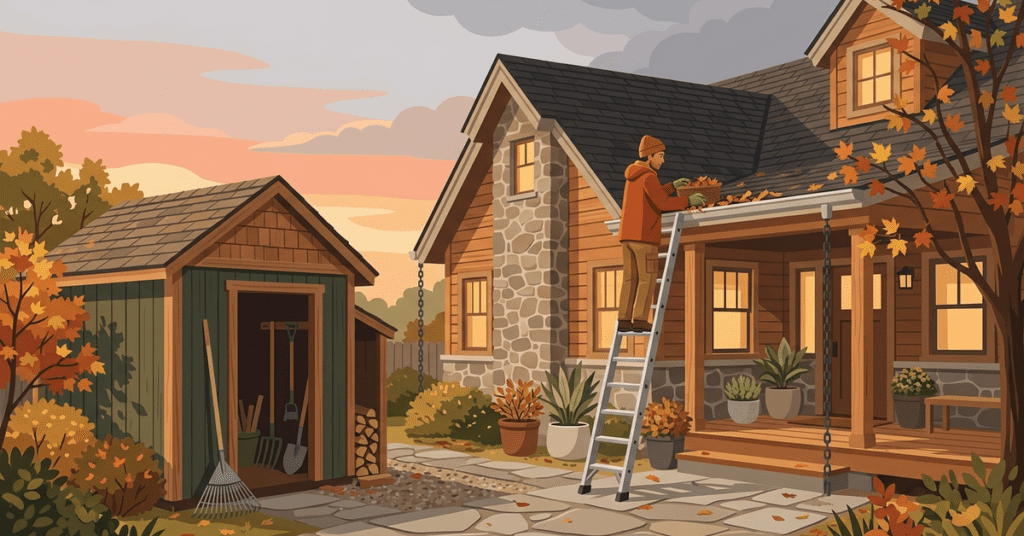
The most direct storm-season concern is your gutters. Debris from spring pollen season and tree flowering tends to accumulate in gutters through April and May, and if that debris is sitting in there when the summer rains hit, you’ve got reduced capacity at exactly the wrong time.
Clear the gutters of any debris — pine needles, seed pods, shingle granules, whatever’s accumulated — and flush them with a hose to check that water flows freely to the downspouts. Slow drainage or pooling in the gutter channel means a partial blockage somewhere, usually at the first elbow on the downspout.
Check downspout outlets too. Make sure water is being directed far enough away from the foundation. The standard recommendation is at least four feet of flow extension from the downspout base, and in areas with clay soil or low grade, more is better. A splash block handles light rain. A downspout extension handles real storms.
While you’re looking at the gutters, check the fascia behind them. Soft spots, visible discoloration, or areas where the gutter is pulling away from the fascia are signs that moisture has been getting in. Address those before the heavy rains, not after.
Your Patio and Outdoor Surface
After a winter of temperature variation, patio surfaces deserve a look. On concrete, check for new cracks, particularly any that have opened up or show vertical displacement — one side slightly higher than the other — since that indicates active settling rather than surface cracking. These don’t fix themselves.
On paver patios, look for areas where the surface has shifted noticeably or where individual pavers are rocking when you step on them. This is usually a sign of base material that’s settled unevenly, often from water infiltration underneath. It’s a straightforward repair if caught early — pull the affected pavers, add compacted base material, reset — but it gets more complicated if water continues to work at the area through a storm season without being addressed.
Check the drainage patterns around the patio perimeter. Water should flow away from the house and toward drainage areas, not pool at the edges of the slab or run toward the foundation. If you see signs that water has been pooling (staining, erosion patterns in mulch, soft spots in the lawn adjacent to the patio edge), that’s worth addressing before summer sets in.
Pergola and Screened Porch Check
For wood pergolas, look at the base of the posts where they meet the footings or the deck surface. This is where moisture damage starts, and it’s where deterioration is most likely if there are drainage issues. Soft wood, visible discoloration, or posts that move when you push on them are red flags.
Check the roof of a screened porch for any screen damage from winter. Small tears don’t stay small through a season of insects and wind pressure. The screen framing, particularly any wood components, should be solid without soft spots. Caulk any visible gaps at the junction where the porch roof meets the house — that connection is a common entry point for water during wind-driven rain.
Ceiling fan mounting hardware for outdoor fans on a covered porch is worth a quick look. Fans that have been running in humid conditions for a couple of years sometimes develop loose mounting hardware that isn’t immediately obvious but becomes more of an issue as the fan runs more hours through the summer.
The Point of All This
None of these inspections take very long, and most of what you find will be fine. The value is catching the things that aren’t fine before they become expensive. A loose gutter section that gets addressed in May costs far less than a fascia replacement in August. A paver section that gets reset before storm season prevents a drainage problem from developing all summer.
The CSRA storm season is predictable enough that this kind of advance maintenance actually makes sense to schedule. Spend an hour now, save a headache later.