Hiring someone to work on your home always comes with a little pressure. You want the job done right. You want the finished project to look good. You want to avoid surprise costs, sloppy work, and that sinking feeling of realizing you hired the wrong person.
That is especially true when you are looking for screened in patio contractors.
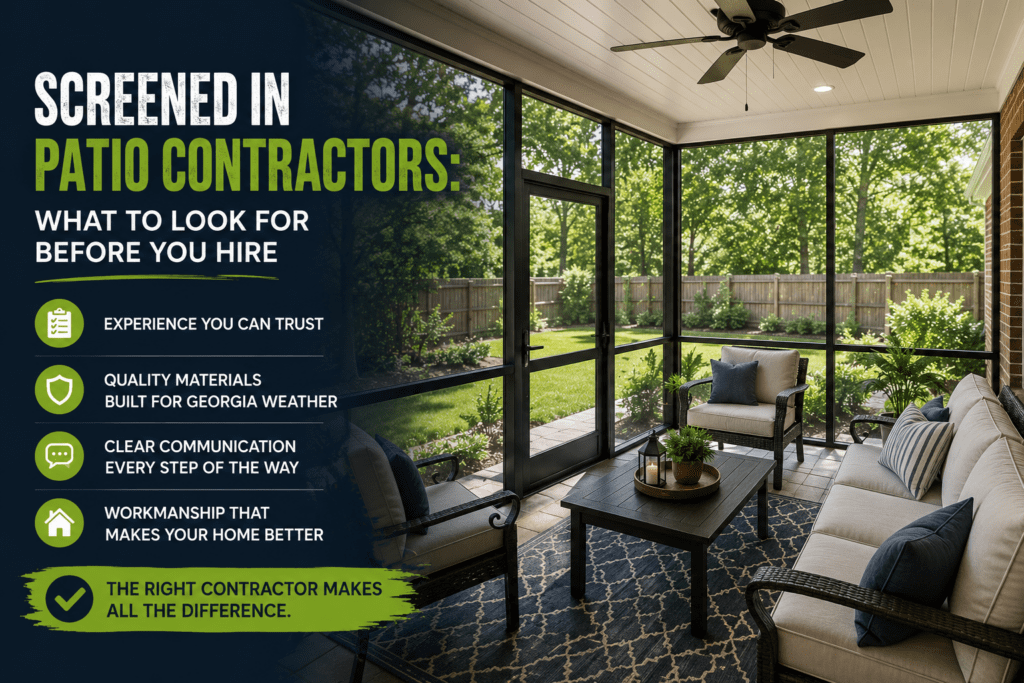
A screened patio may seem simple from the outside, but a good one has to do several things at once. It needs to keep bugs out, let fresh air in, handle Georgia weather, match your home, and feel comfortable enough that you actually want to use it.
So before you hire a contractor, it helps to know what to look for.
Start With Experience in Screened Outdoor Spaces
Not every contractor who works on exterior projects specializes in screened patios, porches, or enclosures.
A screened patio is not just a regular patio with mesh added to it. It involves framing, screen panels, doors, trim, roof or cover connections, airflow, drainage, and long-term durability. If one part is done poorly, the whole space can become frustrating.
Screens may sag. Doors may not close right. Bugs may still sneak in through gaps. The room may feel too hot, too dark, or awkward to use.
That is why experience matters. When comparing screened in patio contractors, look for someone who understands outdoor living spaces, not just general repairs.
Make Sure They Understand Georgia Weather
Augusta-area homes deal with heat, humidity, heavy rain, pollen, wind, and plenty of insects. Your screened patio needs to be built with those conditions in mind.
A contractor should think about:
- How the structure will hold up in humid weather
- Whether the space gets enough airflow
- How rainwater moves around the patio
- Whether the screen material fits your needs
- How the enclosure connects to the home
- Whether the patio cover or roofline needs attention
- How to prevent gaps that let bugs in
A screened patio that might work in one region may not be the best fit for Georgia weather. Local experience can make a big difference.
Ask About Repair Versus Full Installation
Before you assume you need a brand-new screened patio, ask whether repair is an option.
Sometimes a worn patio only needs new screen panels, repaired framing, a better screen door, or updated trim. Other times, the existing structure is too weak, damaged, or poorly designed to be worth patching.
A good contractor should be able to explain both options clearly. They should not automatically push a full replacement if a repair makes more sense. They also should not promise that a quick repair will solve deeper structural problems.
The right answer depends on the condition of your current patio or porch.
Look Closely at Communication
The way a contractor communicates before the project often tells you a lot about how the project will go.
Do they answer your questions clearly? Do they explain your options in plain language? Do they show up when they say they will? Do they listen to how you want to use the space?
A screened patio should be built around your home and your lifestyle. If a contractor does not take time to understand that, the finished result may not match what you pictured.
Good communication helps prevent misunderstandings about size, layout, materials, cost, timing, and expectations.
Your Patio Should Match Your Home
A screened patio should not look like an afterthought.
The best outdoor additions feel like they belong. The framing, roofline, trim, color, doors, and overall style should work with your home’s existing exterior.
This matters for curb appeal, backyard appearance, and long-term satisfaction. Even if the space is mostly for function, you still have to look at it every day.
Before hiring a contractor, ask how they will make the screened patio blend with the home. Will the trim match? Will the structure line up naturally? Will the screen room feel balanced with the rest of the exterior?
Small design details can make the difference between “nice addition” and “why does that look weird?”
Pay Attention to Doors, Corners, and Edges
A screened patio is only as good as its weakest gap.
If doors do not close properly, bugs can get in. If the corners are loose, screens may pull away. If the edges are not finished well, the whole space can look rough.
When talking to screen contractors, ask how they handle doors, seams, corners, and connections. These details are easy to overlook, but they matter every time you use the space.
A patio screen room should feel secure and finished. You should not have to fight with a sticky door or keep stuffing gaps where insects sneak through.
Think About How You Want to Use the Space
Before you hire anyone, get clear on what you want from the patio.
Are you creating a quiet coffee spot? A backyard dining area? A place for kids and pets? A shaded space near a pool? A front porch sitting area? A protected outdoor room for entertaining?
Your goals affect the design.
A space meant for dining may need more room to move around a table. A pet-friendly patio may need stronger lower screen sections. A relaxation area may benefit from ceiling fans, lighting, or a better view of the yard.
The contractor should help shape the project around how you actually live, not just install screens and call it done.
Compare More Than Price
Everyone wants a fair price, but the cheapest option is not always the best value.
A low quote may leave out important details. It may use lower-quality materials. It may not include repair work that becomes obvious later. It may also lead to a finished project that needs fixes sooner than expected.
When comparing patio screening companies, look at the full picture:
- What is included?
- What materials are being used?
- Does the contractor explain the process clearly?
- Are repairs included if needed?
- Does the design fit your home?
- Does the contractor understand local weather?
- Do you feel comfortable asking questions?
The goal is not just to get screens installed. The goal is to create a space that feels good, functions well, and lasts.
Warning Signs to Watch For
Most homeowners are not screen room experts, and you should not have to be. But there are a few red flags that should make you pause.
Be cautious if a contractor:
- Gives vague answers about materials or process
- Pressures you to decide quickly
- Does not inspect the existing structure carefully
- Ignores drainage, airflow, or roof connection concerns
- Cannot explain repair versus replacement options
- Offers a price that seems too good to be realistic
- Does not listen to how you want to use the space
A screened patio is part of your home. It is worth taking the time to hire someone who treats it that way.
A Good Contractor Helps You See the Possibilities
The right contractor does more than install screens. They help you understand what your outdoor space could become.
Maybe your plain patio could become a comfortable outdoor sitting room. Maybe your porch could be repaired instead of replaced. Maybe your backyard needs a patio cover before it needs screens. Maybe your current setup is close, but a few smart upgrades would make it much more usable.
A good contractor helps you make informed decisions instead of guessing.
That is what homeowners should look for: clear guidance, practical options, and work that fits the home.
Need Help Finding Screened In Patio Contractors?
Need help turning your patio into a more comfortable outdoor living space? K&K Exteriors can help homeowners looking for screened in patio contractors with screen rooms, screened porches, patio covers, repairs, and custom outdoor upgrades built for Georgia homes.