
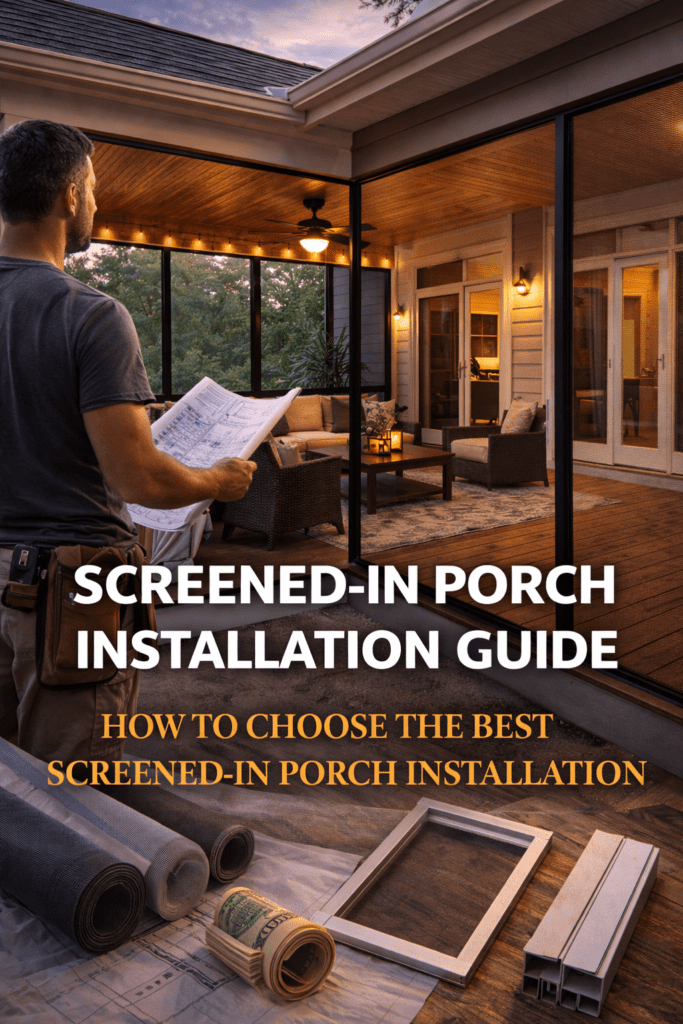
A screened-in porch sounds like a simple upgrade… until you start comparing installs and realize something scary:
Not all screened porches are built the same.
Some look great on day one, then slowly turn into a headache. Screens loosen. Doors stick. Bugs sneak in through gaps you did not know existed. And suddenly the porch you wanted for relaxing becomes the porch you avoid.
If you want a screened porch that actually feels like an upgrade in Augusta and the CSRA, you need to choose the installation the same way you would choose a roof repair or siding job: focus on what lasts, not just what looks good in a quick photo.
Here’s how to do that without getting overwhelmed.
First, decide what “best” means for your home
Before you pick materials or compare quotes, answer one question:
What do you want this porch to do most of the time?
Different goals require different build choices.
- Quiet relaxation space (coffee, reading, evenings)
- Family hangout (kids, pets, daily use)
- Dining and entertaining (table, lighting, fans)
- Game day / TV porch (outlets, mounting, layout)
- All-season comfort (fans, lighting, weather control features)
A contractor can build a screened porch a hundred ways. The best install is the one designed around your real use, not a generic template.
The “big picture” parts of a screened porch install
Most screened porch installations involve these areas:
- structure and framing (posts, beams, supports)
- screen system (mesh choice + how it’s installed)
- doors and entry points
- trim and finishes (how polished it looks)
- comfort upgrades (fans, lighting, outlets, layout)
If any of these are done poorly, the porch feels cheap. If they’re done well, the porch feels like a bonus room.
The 8 signs you’re getting a high-quality installation
1) The installer checks the structure first, not last
If you’re screening in an existing porch, the structure has to be strong and straight. If it’s not, screens and doors will never fit correctly.
A good installer will inspect for:
- soft or damaged wood
- sagging areas
- framing that is out of square
- areas that need reinforcement
- moisture issues that could cause future rot
If the contractor is not interested in checking structure, that’s a problem. It is like painting over a cracked wall.
2) The screen system is built to stay tight over time
A screened porch should not look like a loose tent.
High-quality installs use a screen system that keeps tension tight and creates clean lines. That matters because:
- tight screens look better
- tight screens resist sagging
- tight screens reduce gaps where bugs can sneak in
Ask how they keep the screens tight long term. If the answer is vague, that’s not a great sign.
3) Doors are treated like a major part of the project
Here’s the tabloid truth: a screened porch can fail because of one bad door.
A door that sags or does not seal will let bugs in and make the entire space feel irritating.
A good install should include:
- solid framing around the door opening
- a door that fits correctly and swings smoothly
- strong hinges and hardware
- sealing that reduces gaps
If you want true mosquito protection, doors matter just as much as screens.
4) Materials are chosen based on your lifestyle, not just price
Basic screen can be fine for some homes. But if you have kids, pets, or heavy use, you may want stronger screen material.
A good contractor will talk through options like:
- standard mesh screens
- heavy-duty or pet-resistant screens
- higher-visibility screen options
- mesh choices that affect airflow and bug protection
The best material is the one that matches how you will use the porch.
5) The layout is planned around furniture and walking space
This sounds obvious, but it is one of the most common mistakes.
People build a porch, then realize:
- the seating area is cramped
- the door opens into the furniture
- the walkway cuts through the middle
- the space is not shaped for a dining table
A good installer will talk through how you want the porch to function. The layout should support your comfort, not fight it.
6) Comfort upgrades are planned early
If you want a ceiling fan, lighting, outlets, or a TV setup, it should be planned early, not added as an afterthought.
Common comfort upgrades include:
- ceiling fan support (and wiring if needed)
- warm lighting that makes the space usable at night
- outlets for chargers, appliances, or entertainment
- fan-ready or light-ready ceiling options
When these are planned properly, the porch feels intentional, not pieced together.
7) The finishing work looks clean and “belongs” with the home
This is the difference between a porch that looks like it was always part of the house and a porch that looks like it was added quickly.
A quality install will have:
- clean trim lines
- consistent framing
- corners that look finished
- colors that match or complement the home
You should not see sloppy transitions or mismatched details.
8) You get a clear process, timeline, and warranty
You should know what’s happening before work begins.
A professional installer should explain:
- the steps of the project
- expected timeline
- what’s included in the quote
- what’s not included
- warranty coverage and what it applies to
If you feel confused before the job starts, it usually gets worse during the job.
The questions to ask before choosing an installer
These questions help you spot quality fast:
- What screen system do you use, and how does it stay tight?
- What screen material do you recommend for pets or heavy use?
- What type of door is included, and how do you seal it?
- Will you inspect and reinforce existing framing if needed?
- Is electrical included if I want lighting or a fan?
- What is the timeline, and what is the warranty?
A good contractor will not be annoyed by these questions. They will respect them.
Red flags that should make you pause
If you notice any of these, slow down:
- vague quotes with unclear materials
- no mention of door sealing
- no interest in checking structural condition
- pressure to decide quickly
- “We’ll figure it out as we go” energy
- unusually low price with no detail
Cheap installs can get expensive later.
Bottom line
The best screened-in porch installation is the one that feels comfortable, looks finished, and stays bug-resistant for years. Focus on structure, tight screens, solid doors, and comfort upgrades planned from the start.
If you want a screened porch that fits your home and your lifestyle, the easiest next step is a professional estimate.
K&K Exteriors: Discover Custom Patio Covers & Screen Rooms in Augusta
Contact K&K Exteriors: Schedule Your Estimate for Exterior Improvements: Get a Screen Porch Estimate in Augusta