
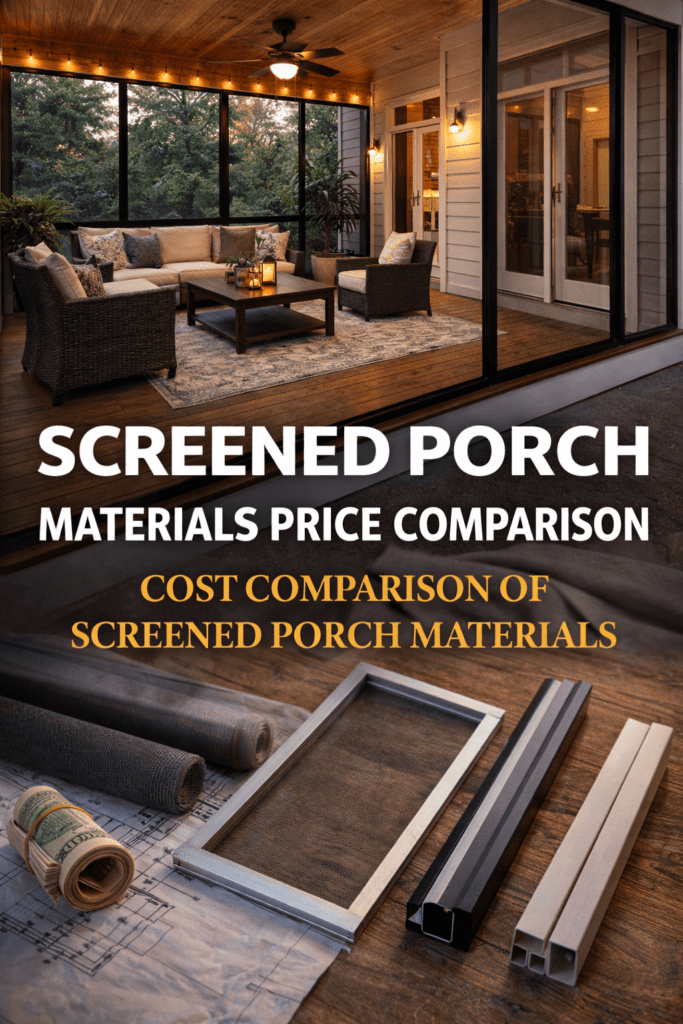
If you’re trying to budget for a screened-in porch, here’s the part most homeowners don’t realize at first:
The materials you choose can change the cost almost as much as the size.
And in Augusta and the CSRA, materials are not just about looks. They affect how long your porch lasts, how much maintenance you deal with, and how comfortable the space feels during heat, humidity, pollen season, and stormy weather.
This guide breaks down common screened porch material choices in plain language, so you can make smart decisions without feeling like you need a construction dictionary.
Step one: know what “materials” actually means
When people say “screened porch materials,” they usually mean several categories:
- screen material (the mesh itself)
- screen framing system (how the screens are held in place)
- structural framing (posts, beams, supports)
- trim and finishes (what makes it look clean and complete)
- doors (often the weak link if done cheaply)
- flooring (existing slab vs upgraded surface)
Not every project includes all of these from scratch, but each one can affect the final cost.
1) Screen materials: the biggest comfort decision
Screens look simple, but they are not all the same. Your screen choice affects:
- durability
- visibility (how clear the view is)
- airflow
- bug protection
- how often you have to repair or replace screens
Standard fiberglass screens
Typical cost level: lower
Why homeowners choose it: affordable and common
Downside: can tear or wear faster in high-traffic homes
This is a good basic option if you want bug protection and you do not have kids, pets, or heavy use.
Heavy-duty / pet-resistant screens
Typical cost level: medium to higher
Why homeowners choose it: stronger, more durable, handles real-life use
Downside: may reduce visibility slightly depending on the product
If you have dogs, kids, or you plan to use the porch daily, this can be worth the upgrade. Replacing screens is not fun, so durability often saves money over time.
High-visibility screen options
Typical cost level: higher
Why homeowners choose it: clearer view and more open feeling
Downside: higher price, sometimes less forgiving if damaged
These screens can make the porch feel more like an outdoor room because you see the yard better. If your view is a big part of the porch experience, this can be a great upgrade.
Tighter mesh screens for smaller insects
Typical cost level: varies
Why homeowners choose it: improved bug control
Downside: can reduce airflow depending on the mesh
This can help if you deal with smaller pests, but it’s important to balance bug protection with comfort. If airflow drops, the porch can feel hotter.
2) Framing and structure materials: what holds everything up
Your porch needs strong, straight framing so screens and doors fit correctly. Structural materials affect:
- strength and stability
- how “finished” the porch looks
- long-term maintenance
Wood framing
Typical cost level: varies
Pros: classic look, versatile, can match many homes
Cons: may need ongoing maintenance depending on exposure and finishes
Wood can be a great choice, especially when properly sealed and maintained. It also gives a warm, traditional feel that many homeowners love.
Aluminum framing systems
Typical cost level: medium to higher
Pros: clean modern look, low maintenance, durable
Cons: can cost more upfront depending on the system
Aluminum often gives that “modern screened porch” look, especially with darker frames. It’s also a common choice for homeowners who want a cleaner, low-maintenance exterior.
3) Trim and finishes: where your porch gets its “wow factor”
This is the difference between a porch that looks like an add-on and a porch that looks like it was meant to be there.
Basic trim and simple finishing
- lower cost
- gets the job done
- looks fine, but may not feel “high-end”
Upgraded trim and a finished framing look
- higher cost
- adds polish and curb appeal
- helps the porch blend with the home’s exterior
If resale value and appearance matter, better trim and finishes can make the whole porch feel more premium.
4) Doors: the comfort gatekeeper
This is where homeowners get burned.
A screened porch can be built perfectly, but if the door is flimsy or poorly installed, you get:
- gaps that let bugs in
- doors that stick or sag
- constant frustration
Basic screen doors
Typical cost level: lower
Pros: affordable and functional
Cons: can wear faster and may not seal as tightly
Upgraded doors with better seals and hardware
Typical cost level: medium to higher
Pros: smoother use, better bug control, sturdier feel
Cons: higher upfront cost
If you want a porch that actually keeps mosquitoes out, door quality matters a lot.
5) Flooring: the part everyone forgets until the end
Flooring affects both appearance and comfort.
Existing concrete slab
Typical cost level: lower
Pros: budget-friendly, durable
Cons: can feel plain unless dressed up with rugs and furniture
Composite or upgraded deck flooring
Typical cost level: medium to higher
Pros: cleaner look, comfortable underfoot, modern vibe
Cons: higher cost, depends on structure and design
Tile or finished surfaces (project-dependent)
Typical cost level: varies
Some homeowners want an upscale look, but this depends heavily on the structure and how the porch is built.
The smartest way to compare materials (without overthinking it)
Ask yourself three questions:
1) How hard will this porch be used?
If it’s going to be your main hangout space, choose more durable screens and better doors.
2) Do you care more about view, durability, or bug control?
You usually can’t max out all three without spending more, so pick your priority.
3) Do you want “basic and functional” or “finished outdoor room”?
That answer shapes your trim, lighting, door choices, and overall material level.
A simple best-value setup most homeowners love
If you want a porch that feels comfortable and holds up well in CSRA conditions, many homeowners lean toward:
- durable screen material (especially if pets/kids)
- a clean, low-maintenance framing system
- solid door hardware with good sealing
- simple but polished trim
- a layout that fits real furniture and real life
That combination tends to give the best long-term satisfaction, not just the lowest upfront price.
Bottom line
Material choices change the price, but they also change how much you enjoy the porch. The best screened porch is not the cheapest one. It’s the one built with the right materials for how you actually live.
If you want help choosing the best materials for your home and budget, an estimate is the easiest way to compare options without guessing.
K&K Exteriors: Discover Custom Patio Covers & Screen Rooms in Augusta
Contact K&K Exteriors: Schedule Your Estimate for Exterior Improvements: Get a Screen Porch Estimate in Augusta